Thursday, September 15, 2011

FW: Trading loss in UBS - a first warning like in 2000 and 2008?


INTERNAL USE ONLY – NOT FOR PUBLICATION


1992: Nick Leeson:  Barings… è Ending Barings life…. http://en.wikipedia.org/wiki/Nick_Leeson


2008 : (Januar) -  Soc .Gen. Jerome Kerviel 4.9 billion loss    è Makes tanks later 2008..   link: http://en.wikipedia.org/wiki/January_2008_Soci%C3%A9t%C3%A9_G%C3%A9n%C3%A9rale_trading_loss_incident


September 2011: UBS Loss/Fraud 2 billion è http://www.20min.ch/finance/news/story/30822450


Think this is random? Hardly! Next is some HF – high profiled going under (I could easily imagine one specific one in the media often) and we have an almost repeat of 2000, 2007/08 …..


Let me stress for good orders sake: I remain focused on ‘Maximum Intervention’ as main theme for Q4 – which means more extend-and-pretend and probably slight risk-on environment despite the odds.


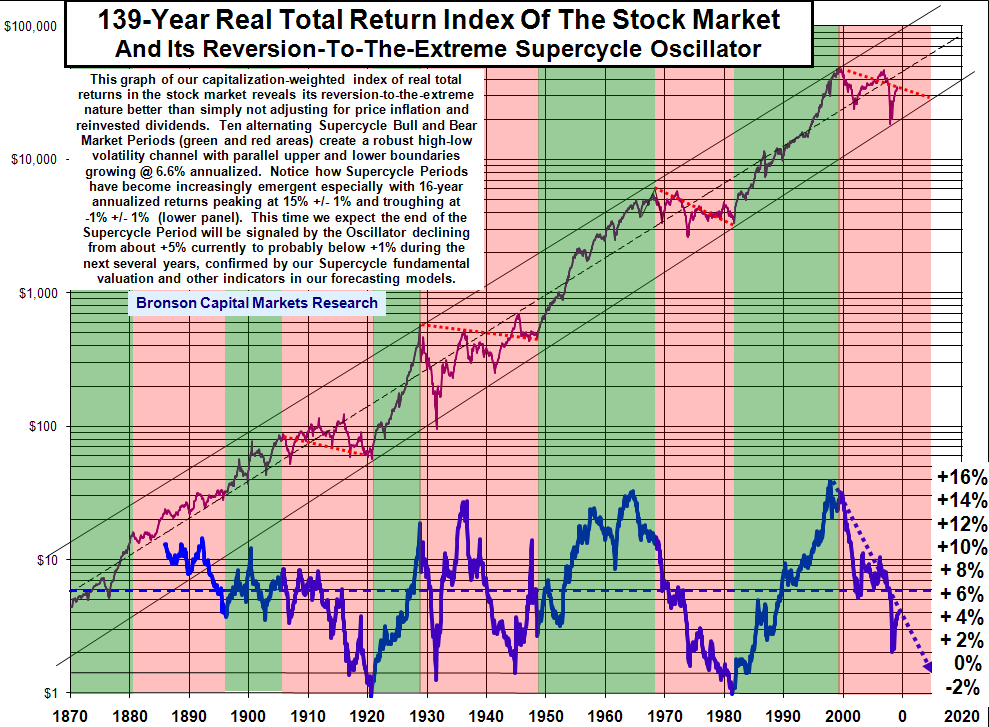
Alan P send me this pic:


cid:image001.png@01CC7394.5C57E540

This email may contain confidential and/or privileged information.
If you are not the intended recipient (or have received this email
by mistake), please notify the sender immediately and destroy this
email. Any unauthorised copying, disclosure or distribution of the
material in this email is strictly prohibited.

Email transmission security and error-free status cannot be guaranteed
as information could be intercepted, corrupted, destroyed, delayed,
incomplete, or contain viruses. The sender therefore does not accept
liability for any errors or omissions in the contents of this message
which may arise as a result of email transmission.

Sunday, September 11, 2011

10th anniversary of 9/11: Let's look forward as well as back | TradingFloor.com

Dear All,

I wrote this piece the day before 9/11 10 th anniverisary. It's a 100.000 feet perspective on how we moved towards Entitlement societies and got scared.

I hope the piece has the right message and tone on this day.

http://www.tradingfloor.com/blogs/steens-chronicle/10th-anniversary-of-911-lets-look-forward-as-well-as-back-1261429725


Sincerely,

Steen Jakobsen
This email may contain confidential and/or privileged information.
If you are not the intended recipient (or have received this email
by mistake), please notify the sender immediately and destroy this
email. Any unauthorised copying, disclosure or distribution of the
material in this email is strictly prohibited.

Email transmission security and error-free status cannot be guaranteed
as information could be intercepted, corrupted, destroyed, delayed,
incomplete, or contain viruses. The sender therefore does not accept
liability for any errors or omissions in the contents of this message
which may arise as a result of email transmission.

Friday, September 9, 2011

Steen's Chronicle: Why SNB floor could be important

This chart shows why SNB new floor could be of importance. I am just back from yet another trip to Zürich and I found people EXTREMELY bullish on CHF – there is talk of corporate wanting to sell etc etc but..


-          SNB has ‘unlimited ability to print money’

-          SNB sees deflation – hence need to monetize

-          Bias way too strong for strong CHF  - Bigger than 95 per cent conviction

-          SNB is clearly committed and feels there is no alternative plus and this is important – they have 100 per cent political backing


Source: Bloomberg LLP and Saxo Bank Strategy and Research


I have two strong view for 12 month plus:


1.       A much stronger US Dollar  è DXY in 125 (now 75.00)

2.       A much higher EUR vs CHF è 1.40/1.5000


Scenario for much stronger US dollar:


Based on  too low consensus on US growth, better than ‘announced’ jobs + consumer spending data, and finally US will become competitive inside next two years on unit labor costs + fat tail risk of HIA 2 being introduce- and the all of G-20 moving to QE Extreme. (see below)


Scenario for much stronger EUR/CHF


SNB have no alternative, Switzerland going into Japanisation without “extreme measures” – major change in ‘expectation curve’ when we see 1.3000 plus people will have to cover massive EUR calls selling and finally inside next 12 month we have “resolution” on EU debt crisis.


There are really only three ways to deal with this crisis:


1.       Accept Crisis 2.0 – deleveraging and pain, but restructure – unlikely accepted by policy makers but likely from market position.

2.       Accept Japanisation – deflation, slow-growth and no structural changes.

3.       Go to QE Extreme – betting the ‘weather’ will improve by spending money making very gradual structural changes. The Keynesian economists/advisors again getting upper hand as they now can claim (wrongly!) that the reason we did not get back on track is because we did too little, too late – similar to Japan. This is the route G-20 will move to. I see all  major nations in QE Extreme in by half-year in 2012.


Greece going bankrupt is not a fat fat-tail event(Black Swan) it’s the most expected outcome ever!


IF – Greece leaves it will lead to major RISK-ON scenario as Europe will have regained initiative, so if Euro-zone’s next development is a break-up from the weak (Greece) then it’s good for risk – if it’s a break-out from the strong (Finland or Germany) it’s Crisis 2.0 extreme. Chances? 50/50


Off to Spain and the Vuelta and some facts finding,


Nice week-end


Steen


Med venlig hilsen  |  Best regards
Steen Jakobsen  |  Chief Economist


Saxo Bank A/S  |  Philip Heymans Allé 15  |  DK-2900 Hellerup
Phone: +45 39 77 40 00  |  Direct: +45 39 77 62 23  |  Mobile: +45 51 54 50 00


Please visit our website at www.saxobank.com


This email may contain confidential and/or privileged information.
If you are not the intended recipient (or have received this email
by mistake), please notify the sender immediately and destroy this
email. Any unauthorised copying, disclosure or distribution of the
material in this email is strictly prohibited.

Email transmission security and error-free status cannot be guaranteed
as information could be intercepted, corrupted, destroyed, delayed,
incomplete, or contain viruses. The sender therefore does not accept
liability for any errors or omissions in the contents of this message
which may arise as a result of email transmission.

Tuesday, August 30, 2011

Chicago Fed Evans - CNBC - Clearly speaking Bernanke's QE/Asset purchase case..and making "academic argument on how debt is the new excuse)


KEY POINT: Evans creates “connection” to why debt is the new excuse for “more” rather than “less” in action…….


Reference: Debt levels = slower growth … studies by Rogoff and recent paper presented in Jackson Hole called:  The real effects of debt  (Now the academic policy context!!!!!)


Below is my “short-notes” on the paper from yday:

==================================================================================================================================


Gr8 paper @ jackson hole!

The real effects of debt by:

Stephen Cecchetti, m s mohanty and fabrizio zampolli

Findings:

80-100 pct debt to gdp public sector harmful....

90 pc in corp debt to gdp

85 pc for household debt


Touches on demographics gravity on growth

Ratio of debt to gdp in advanced countries risen from 165 pc in 1980 to 310 pc today

Nice discussion how debt is deemed 'intricsic and not of value' to economic models (one debtor - one creditor)


Why has debt risen?

1 access to credit

2 the great moderation

3 lower real rates

4 tax incentives on debt


Then finally some gr8 data on pp 23-25 on countries split by


Household, corp and public sector debt


Whole document only 30 ish pages and easily read.


Steen


This email may contain confidential and/or privileged information.
If you are not the intended recipient (or have received this email
by mistake), please notify the sender immediately and destroy this
email. Any unauthorised copying, disclosure or distribution of the
material in this email is strictly prohibited.

Email transmission security and error-free status cannot be guaranteed
as information could be intercepted, corrupted, destroyed, delayed,
incomplete, or contain viruses. The sender therefore does not accept
liability for any errors or omissions in the contents of this message
which may arise as a result of email transmission.

Friday, August 26, 2011

Bernanke is playing poker and doing it well for now - Analysis of Bernanke speech at Jackson Hole.


This morning I wrote a piece called: Less QE and more radio silence please Mr. Bernanke and it seems the Chairman did listen – I wish! – and just to disclaim upfront:  I was in the camp who thought Ben Bernanke would move to full QE right away, but facts is fact and this is my take:


·         From tactical point of view (as in relative to what he may need to do later) this is good news. He is stating his concern, he is not in panic (at least publically), and he talks about having more tools if needed. This means: I will do something if market drops – I think his level is 1050/1000 then he will be back in force stimulating
·         He gains some credibility by focusing on the US debt level and that it’s solution is fiscal plans. He is using classic economy theory that when in liquidity/debt trap the only real way to gain growth is through fiscal stimulus such as tax breaks, jobs incentives and other forms of reallocation of investments.
·         He also directly moves “the ball” over to the US Congress and their need to react to the debt situation. This is good for markets and probably the best news of this speech – it plays to the political theory that the best growth conditions are created through the inability of the political establishment to conduct any form of policy. Think about President Clinton – he came in with major political program but ended up doing: Nothing – and then as a byproduct came growth, fiscal SURPLUS and earnings. This is the good news.
·         The “negative news” is that most people had looked for specific targeted help to the mortgage sector through the FED buying more mortgage bonds. This would have helped the banks under pressure such as Bank of America and others by taking risk  of their books – this is now delayed at least temporarily.


The bar was set low for this speech but Bernanke told the market he is sitting still for now, and that fiscal policy needs to play a greater role. This is no different from the ECB which also feels European fiscal policy needs to play greater role if debt crisis shall be resolved. This is a small step for mankind – as we did not get more : Extend-and-pretend for now.


From market perspective I stick to my theory of a small up-move in risk before final 5th leg down. Being long here of course is a risk – and I have with the help of Mr. Mads Koefoed constructed this “likely” scenario of S&P over the next three months to not be totally rudderless:


Source: Bloomberg LLP and Saxo Bank


This chart uses the recent low in the market in early August and then projects the future moves in S&P by using a 2008 analogy – this leads to the chart above indicating that we will move up into late September and then we will start towards new low in end December/Early January.


This is of course not a precise science, but only a reference tool.


Finally,


We are presently working on Q4 forecasts and I have two major changes:


1.       I will adjust our GDP forecast for the US up relative to consensus based on our leading indicators which shows massive improvement in consumer spending  (some of it due to much lower gasoline prices). This also play to my number one rule of economic projections – namely: Mean-reversion. We were negative on US growth all year and was right – now we are moving to opposite side- being more positive than the consensus (which is extremely) low.
2.       We will start focusing on how the US Dollar may stand in front of a major strength period which will be based on their increase in competitiveness.


Less QE and more radio silence please Mr. Bernanke

Steen's Chronicle

Less QE and more radio silence please Mr. Bernanke

26 August 2011
When talking about the impact from Quantitative Easing (QE) one has to realise that most academic studies show that the biggest “impact” from QE on markets comes from the actual announcement of it rather than the execution of it. An analysis of the two prior QE introductions point to a 50 to 100 basis point reduction on bond yields and subsequent inflation of equities via “a feel good” factor – the so-called wealth effect.
But realistically, what has been the net impact of QE1 and QE2? Chairman Bernanke has used 3,000 billion US Dollars to create what? Nothing! Unemployment is still above 9.0 per cent, the housing market is still in a slump, and now the only successful thing going for the Fed is the stock market's rise from the floor at 666.00 in March 2009. But now there's talk of an interbank funding crisis and unrealised losses. It certainly smells like 2008, doesn't it? Or what about August 2010? – Yes!  It is almost a 100 per cent analogy to last year. It’s actually like watching the movie Groundhog Day.

The impact from another round of QE on the wider capital markets this time around is likely to be more limited than following  previous announcements.  At best I foresee two to eight weeks of relief risk-on trading, but with the market no longer willing to remain idle while policy makers buy even more time. Thus the positive tone could change sooner rather than later.  Putting numbers on the upside potential on the stock market it is important to note that the start of QE1 created a 78 percent rally in stocks, while QE2 saw a 29 percent rally, so the impact is clearly smaller from one QE to another. The most likely scenario from here on would be an upwards move to the tune of 7-15 percent (Target: 1250-1350 in S&P cash.)
QE3 could also signal the final leg of a weak USD. I anticipate the U.S. as being two or three years away from being fully competitive again as a production hub, competing with Asia. With a real unemployment rate of 17 percent and the US Dollar at historic lows the U.S.  seems to have come full circle in terms of unit labour costs meaning it can soon compete more efficiently in the global marketplace. I believe that post the next presidential election we will see labour market policies which are very beneficial to production in the U.S.  This is also a theme which Boston Consulting Group has touched on in its May report called: “Made in the USA, Again .” Due to this QE3 could present an opportunity to scale into long USD, after the grace period. The US Dollar will first weaken and (then ultimately strengthen). This in itself would be a sign of the economic world healing itself.
Looking at how precious metals will react to a new QE, the answer is simple. I think we will see USD 3,000 if not USD 4,000 for gold, and other metals should follow suit. That said, as with the USD, if this is the “end game” then the spike will be followed by risk aversion which could overall curtail the highs. At all times one has to realise this is close to the end of the trend, and for every USD 100 gold rises, the risk increases disproportionately as there is more and more speculative hangover involved.
 
There will be monetary stimulus – the question is in what form and shape. The U.S. is fast approaching a zero growth environment. Going into actual recession for more than one or two quarters is statistically very difficult for the U.S. as its population is relatively young, innovative and mobile. If we don’t get QE3 we will be faced with some version of Operation Twist in the form of support for the bond market’s longer dated maturities. This should be directed specifically to the segments which are relevant for housing and long-term funding. Effectively the Fed would then buy bonds in the 10 to 30 year sector of the yield curve with a pre-announced target rate below a certain number like 1.50 percent (currently it is trading at 2.25 percent). To finance this, the Fed would turn around and simultaneously sell shorter maturity T-bills making the exercise relatively balance neutral.

The real question however is:  is there anything the Fed can do to stimulate growth beyond keeping rates lower for longer? The answer is probably a resounding “No!” The Fed’s impact on the market is limited to psychology and monetary easing. When looking for growth an old economic rule states that when in a debt trap, only fiscal policies work, which means that when in a debt trap you need to increase the stimulus through tax cuts, public sector jobs and the like. (Note: This is not my medicine, but the Keynesian standard approach to it.)
Pre-election fiscal policy measures are in the hands of Congress with huge political opposition, but post election the story will be very different.
There is another political theory stating that the best environment to create growth in is one in which politicians have no power to pass legislation (similar to the U.S. situation for now until the U.S. elections). Think about Clinton: he had a major “programme” coming in as President, yet failed to get anything whatsoever done in his eight years in the White House which then led to the biggest growth period in U.S. history. What does this tell us? Total radio silence works as the micro-economy - investors, consumers and companies - adjust their behaviour and consumption to the new reality and then start moving forward. The last thing that we need is “political noise” and promises of better days ahead with nothing to back them up.

Wednesday, August 24, 2011

Steen's Chronicle: Fade the fade on QE - Tactical Long in stocks from here and new lows in European co-ordination

Fade-the-fade-from-FED-is-the-game


The first news that caught my attention this morning(and made me laugh so much I almost cried!)  was a  “leaked” piece by Fed via the “Senior Economic Reporter” Steve Liesman of the CNBC – Apparently he is led to – and then needing to share with us – believe we should not expect much from the Fed Chairman this coming Friday at Jackson Hole. Nice try Fed ! Managing expectations and through the PR agent for Buffet/Fed/Treasury and anyone who is playing the “political” game of “spinning” is a nice try – I will however “fade the fade” so to speak.


Think about it: Chairman Bernanke has used 3.000 billion US Dollars to create what? Nothing? Unemployment is still above 9.0 per cent, Housing market is still in a slump, and now the only success going for the Fed, the stock market, is falling apart with talks of interbank funding crisis, unrealized loss’ – smells like 2008 ? Certainly does. Smells like August 2010? – Yes! It is an almost 100 per cent analogy to last year.


Now, you are FED Chairman Bernanke – what will you do? Raise your hand and say: Sorry! I was wrong – dealing with debt through issuing more debt was wrong – I should have known better, but I was the world class expert on Japan, before I got this, my first real, job – I am extremely sorry!


Not likely to happen is it? No rather, when looking at what you can expect from Bernanke you should look at his academic work, at his policy response when faced with low growth, falling inflation expectations, a banking sector under pressure, and alarming unemployment numbers:  The response has always been the same: Print more money.printing-money.jpg


See, often the argument Bernanke has with Japan and the newly coined economic model called Japanisation is that they did too little and too unannounced. Meaning: QE3 is coming – whether he has the political establishment and full FOMC board behind him or not, he will move to some shape or form of QE – it’s in his genes so to speak – he may delay the “official” start and announcement of it until the S&P tanks to below 1.000, but that would happen on Friday if he is seen “failing” to give the market what it needs. No certainly, fade-the-fade-from-fed is the game.


I should note in the survey’s I have seen on the expected outcome from Jackson Hole, the QE option has little support anyhow – people are mainly expecting a continuation of last FOMC meeting – indicating lower rates for longer, a negative assessment of the outlook for the US economy and some underlining on their willingness to do everything needed to re-start the US economy.


The second highest probability in the survey is Operation Twist – and this paper called: “Operation Twist and the effect of Large-Scale Asset Purchases” from Federal Reserve Bank of San Francisco, written by Titan Alon and Eric Swanson, from April 25,2011 is of extreme essence to understand Fed and its thinking. The paper links Operation Twist of the Kennedy Administration with the QE2.


I did small Saxo Video on the Jackson Hole yesterday:


Link to video:  Jackson Hole precursor.


Strategy Update August 2011


Now in terms of the market and allocation it has been a while since my latest update – to recap recent “signals” – I went short in May with the note: No Silver Bullets and went to neutral in July and has stayed there since. I am now willing to go outright long again (with tight mental stop/loss below 1080 in S&P cash) based on reasons which are more tactical short-to-medium term based than an outright believe the market is cheap. It would be a 4th wave correction – after the steep 3rd wave down and ahead of the final 5th wave – which I think will be the end Dirigisme (or managed economies).


Reason # 1: Yield is getting to low end of long-term trend – indicating some “turn around” in risk-off


Source: Stockcharts.com


Reason # 2: Market is over-sold and in-flow has started (and Bernanke can only surprise positively)


Source: Stockcharts.com


Reason # 3: The perceived “funding crisis” is overdone for now at least….. USD into EUR basis swap


Source: Bloomberg LLP


A Morgan Stanley Research paper pointed out that the largest European banks are >90 per cent through their funding targets for 2011 – which does not mean there could not be renewed pressure, but for now they can “live” through 2011 and the real issues is in Q1-2012. Furthermore it should be noted the LIBOR & EURIBOR is fixing higher every single day – small increments, yet higher.


Reason # 4: The rest of the arguments…..


-          Dividend yield above 10 year yield in the US

-          The always bullish analyst’ are all turning bearish – actually recommending selling stocks

-          Lack of understanding from Anglo-Saxons on the true dilemma in Europe. (The political will to do whatever needed in the last minute modus operandi of European history)

-          Relatively higher consumer spending in my favorite leading indicator: http://www.consumerindexes.com/

-          Growth forecast now at 1.7% for 2011 among the pundits(Ivory Tower economists) – down from bigger than 3% at the start of the year and 2.5% only in July – there is major mean-reversion in economic projections, now the market is probably too low relative to where we end up.

-          Limited risk:  You are wrong if S&P cash trades two days below 1080/1090 on a closing basis.


New low in EU commitments


It’s hard not to laugh, again, when reading the recent own goals produced by every single player in the EU debt crisis, but there are starting signs of a  Mexican Stand-off and this week was certainly a new low in commitments and solidarity in Europe.


This week I read three excellent piece on the EU which gave me plenty to think about. I will leave the link for you to read – in particular the paper from Daniel Gros and Thomas Mayer should be a must read research as they are outlining what I increasingly think will be the compromise in this standoff:


-          CEPS Commentary - August 2011: What to do when the euro crisis reaches the core, Daniel Gros, Thomas Mayers – download link:  Euro crisis reaches the core. They come up with solution which seems in line with Maastricht and which create European Monetary Fund with ECB as lender-of-last-resort. Extremely interesting and insightful.


-          Spiegel Online: Dutch Finance Minister on the debt crisis: “We are all threatened by contagion” – key paragraphs: “…Should the Greek government not be in a position to fulfill the terms of the bail-out program, then the Netherlands will refuse to provide any further aid”. Talking about the Finland Clause (Finland getting collateral reference): “As far as we are concerned, no deal has been made” – then he – after this interview move to state: “The only thing that helps is for everyone involved to practice verbal discipline”.


-          Deutsche Bundesbank, Monthly Report, August 2011:  The comment in this report clearly shows Bundesbank’s reservation for what’s going on: “With the sovereign debt crisis spreading to other euro-area member states, the Governing Council also reactivated its Securities Markets Programme (SMP). This would, it argued, help restore better monetary policy transmission” – and the whole final paragraph is about how we may need to go a “worse” place to get to a  better place is again must read:


I know – too much reading in this report, but all of it important in my view.


Keep the powder dry,


Steen


Med venlig hilsen  |  Best regards
Steen Jakobsen  |  Chief Economist


Saxo Bank A/S  |  Philip Heymans Allé 15  |  DK-2900 Hellerup
Phone: +45 39 77 40 00  |  Direct: +45 39 77 62 23  |  Mobile: +45 51 54 50 00


Please visit our website at www.saxobank.com


This email may contain confidential and/or privileged information.
If you are not the intended recipient (or have received this email
by mistake), please notify the sender immediately and destroy this
email. Any unauthorised copying, disclosure or distribution of the
material in this email is strictly prohibited.

Email transmission security and error-free status cannot be guaranteed
as information could be intercepted, corrupted, destroyed, delayed,
incomplete, or contain viruses. The sender therefore does not accept
liability for any errors or omissions in the contents of this message
which may arise as a result of email transmission.