Sunday, December 9, 2012

Club Med mastermind Monti resign - Italy to apply for OTM?


I was preparing a week-end macro note when Reuters had breaking news:

Italy PM Monti will resign as soon as budget passed - statement

The Mastermind of Club Med Mario Monti have resigned as he has lost the backing of Berlusconi's People of Freedom Party. You can't blame a 69 year old bureacrat for not wanting to sit this one out, but Monti will be major loss for the pretend-and-extend crowd in Club Med. 

Club Med managed in 2012 to get considerbale concessions from Germany and the EU Commission and no one has been more instrumental than Monti, who by Brussels insiders is seen as the 'puppet master' of Rahoy, Hollande and Draghi. His influence can not be overestimated, but make no mistakes Monti is the definition of extend-and-pretend.

When asked recently asked for two things which could help Europe back to normalisation he answered: Stabile government and Euro bonds. Ironic he now is the very reason that politics again will in focus and that Euro bonds have never been further away with Berlusconi and Nothern League certain to call for reintroduction of the Lira, Italy is again in the headlines for the wrong reasons. 

The social tension in Italy but also in Spain and Portugal is about to explode. The desperate youth will look for more Radical politicians to carry their message, this has always been the case when we have recession and frustations - unfortunately.

The Sunday opening in Sydney should see EUR/USD under pressure - but more important will be the reaction of the fixed income market, where ECB should could be activated on the OTM and not by Spain but by Italy. Rumors floated late Friday that Italy would ask, back then it made no big sense, but with this week-end change it could be the reality before 2012 runs out.

This is commment from our Milano office CEO Gian Franco Bazzani: "About Berlusconi, the Corriere della Sera wrote that this is the beginning of the election campaign and also the end of Berlusconi as leader of the moderate area.

The next election, probably on 10/11 March, will formalize the end of Berlusconism. The risk is that nobody will have enough votes to drive the Parliament in 2013. Also the Democratic Party (a blend of very different forces) that probably will be the first party in Italy, will have to negotiate with small political forces to have the majority. Confusion and economic weakness is a very bad cocktail"

___________________________________________________________________________

This is the note I was writing called: Europe turns a negative corner.

This week has been a strange week - the complacency of the market is for everyone to see but underneath the Santa Claus mood quit a few things have changed negative and now even the political climate is again heating up as Berlusconi throws himself into the Italian election race: Old gambler Berlusconi back for last throw (Reuters) - A come-back the  market did not appreciate. It should be noted his party: People of Freemdom only polls at 15 percent, but Berlusconi is going to anti-EU and Monti to gain which will leave Europe and particular ECB shaking it head.

 Italian 10 Y BTP's - December Future

 BTP

 Souce: Bloomberg LLP

Meanwhile in Spain where unlike Italy they still run decisive primary deficits the IBEX - Spanish stock market is showing big divergence with the broader Europe Index, it' underperforming by 4% since end of September:

IBEX vs. STOXX50 Index

IBEX vs Stoxx50

 Source: Bloomberg LLP

Meanwhile Portugal which only a few weeks ago was the posterchild for austerity on Friday recorded the a surprisingly negative minus 3.5 percent in Q3 as export stalls. Portugal slumps deepens as export lifeline disappear (Source: CNBC)

The Industrial Production and the GDP shows a bleak picture - talk is cheap, hard data is troublesome:

Ind. Production

 Portugal is in dire straits - the government is lost threathning to increase taxes "massively" their words not mine, in 2013. One has to ask how politicians became so lost? Was it us the voters who refused to make them accountable? Or is the modern society flawed when Entitlement and social transfer reach or exceed 50 percent of the economy? I think so, when more than 50 percent of population have no interest in changing status qou growth, productivity and innnovation becomes replaced by complacency and egoism. This is why we need a crisis. We need to get back to basic on all accounts the sooner the better.

Strategy

We are short EUR/USD since ECB policy meeting, AUD (China and mining investment peaking), short CAC-40 and long puts on both STOXX50 and S&P.

The overall complacency of the market is at 2000 levels - Nto a single Wall Street analyst sees S&P down next year - they could be right of course but a global slow-down, Europe in crisis and a China trying to find it feet will not make for the best conditions but then again shorting the pretend-and-extend hasn't exactly been the best investment in 2012.

Safe travels,

Thursday, September 13, 2012

Steen's Chronicle: Fomc will do more, not less....

FOMC will do more, not less....

Non-Independent Investment Research

This week had three event risks: The German Constitutional Court ruling, Dutch election and now today the FOMC meeting. Two down one to go....and this one could the 'surprise':

The market is expecting no major change from Fed or at a maximum a change to the outlook to include 2015 from 2014, but...I, as per usual I guess, disagree:

The minutes, the 'leaks', the tone and the focus inside the FOMC have changed for two reasons:

1. The dual mandate has become a single mandate: jobs, jobs and jobs. Even Bernanke is frustrated that his monetary experiment have gotten him close to nowhere in terms of changing the dynamics of the US job market. The US economy have stabilized but not found a new growth path. Fed wrongly continues to believe the unemployment is cyclical, we have long argued its structural(wrong skills, wrong locations, poor average education)

2. The fiscal cliff. The price tag on the fiscal cliff if nothing is done is 3-4 pct of negative GDP due to the automatic cuts and overall austerity. This would be good for the fiscal deficits but....as in Club Med in Europe  the negative multiplier would take US growth to the brink or beyond leading to recession. The political negotiations will need to soften this blow but considering the shenanigans of last years debate there is real risk this will end in compromise where GDP is 'only' impacted by 0,5-1,0 of GDP.( Which is about minus 100 points in S&P)

My 'more' view is based on the need as seen by FED to soften both the blow to unemployment but more importantly to negative growth coming from fiscal cliff.

I see unsterilized asset purchases, extension to 2015 and maybe more explicit policy targets- in other words a full blown QE3.

The market using history says: listen, stock market is not down and US economy is humming along nicely, there is no need for policy change.

I agree with the no need for change, as my number one premise for creating positive growth is to 'do nothing' for years letting the micro-economy adjust and take over from the macro policy mistakes, but......Bernanke and his friend around the world are Keynesian's, they believe firmly in their own abilities to save the world, and most importantly they don't want to be blamed for doing nothing.

Instead they are creating the financial market equivalent of Ground hog Day: This week China announced 100 billion USD worth of fiscal stimulus, Europe agreed to yet another 'rescue fund or mechanism' and the US will print more money... It's so 2008....and its again the Einstein's definition of an idiot: Keep repeating the same experiment expecting different results and you are an idiot.

Market reaction to this will be higher gold(test of 1800?), weaker US Dollar(1,3150?) and a test of stock market highs (1450/60?)

I do however still think this is the fifth and final wave meaning any major moves will be faded and sold by me - the monetary policy's ability to change the macro direction stopped two years ago, this week we may see the end of its ability to take stock and risky assets higher. There is only one cheap asset left in the world: Money, and that's a warning signal to the listen to.

Trades over the FOMC: We will, STST Steen Macro, buy a Friday Gold call, but more in this later. We are long EURUSD as per yesterdays recommendation, took loss in AUD.USD.


This email may contain confidential and/or privileged information.
If you are not the intended recipient (or have received this email
by mistake), please notify the sender immediately and destroy this
email. Any unauthorised copying, disclosure or distribution of the
material in this email is strictly prohibited.

Email transmission security and error-free status cannot be guaranteed
as information could be intercepted, corrupted, destroyed, delayed,
incomplete, or contain viruses. The sender therefore does not accept
liability for any errors or omissions in the contents of this message
which may arise as a result of email transmission.

Wednesday, August 15, 2012

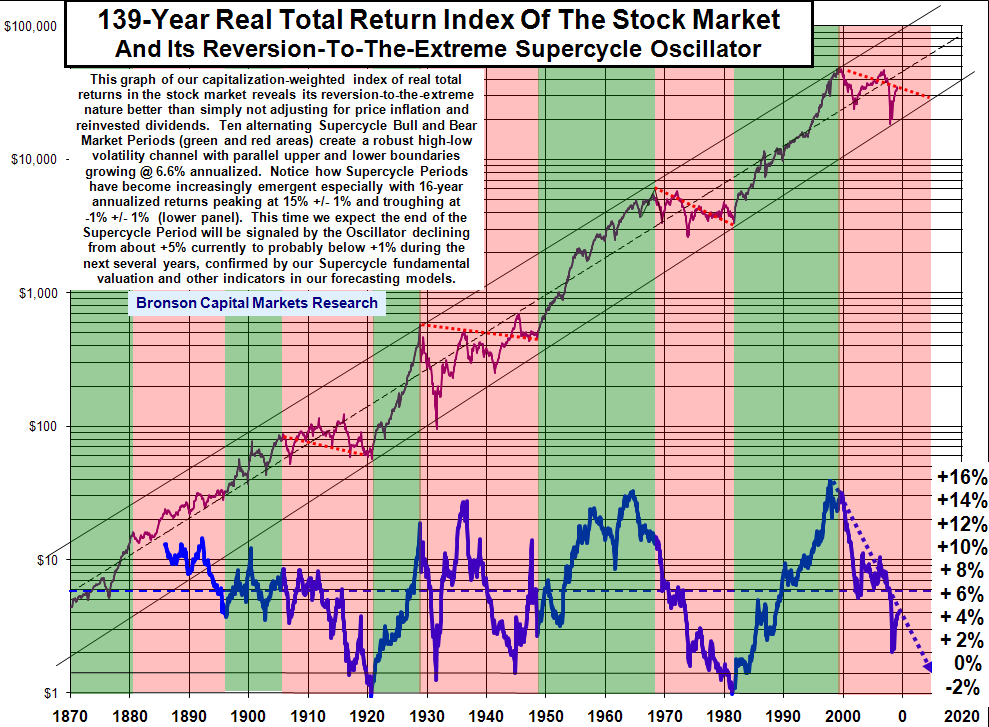
Dow theory

This email may contain confidential and/or privileged information.
If you are not the intended recipient (or have received this email
by mistake), please notify the sender immediately and destroy this
email. Any unauthorised copying, disclosure or distribution of the
material in this email is strictly prohibited.

Email transmission security and error-free status cannot be guaranteed
as information could be intercepted, corrupted, destroyed, delayed,
incomplete, or contain viruses. The sender therefore does not accept
liability for any errors or omissions in the contents of this message
which may arise as a result of email transmission.

Wednesday, April 4, 2012

Macro Brief: FOMC Minutes with a surprise and inflation expectations could start to rise


Wrote this piece post the FOMC March notes: http://www.tradingfloor.com/posts/fomc-minutes-less-than-the-liquidity-junkies-hoped-for-1545086186


But more importantly, the key sentence in the FOMC Minutes was the following:  (Source: Edmund W. Schuster: News from the Fed is moving the market)


"A potentially important debate emerged at the Fed at its policy meeting last month about the U.S. economy's growth potential, the minutes showed. Most economists believe the economy can grow by around 2.5% annually without causing inflation. If the economy's potential is less than that, that could mean that even a small amount of growth could push consumer prices higher and force the Fed to rethink its easy money policies."


Many believe that the U.S. economy has to grow at 3.0 - 3.5% just to absorb new entrants into the workplace.


Further, if there is a chance that inflation could tick up if growth exceeds 2.5%, then the chances of rapid growth above 3.5% seem unlikely. Usually there is a strong inverse correlation between inflation and economic growth.


This is big news and moves the needle on further easing away from “infinite cheap money” forever…..AND as I have state a few times: Velocity of money continues to be the key component in understanding the inflation risk: Good old economics states: M *V = P* Y, M is money supply, V is velocity, P is price level and Y is quantity of output.  This can be converted into: P = M* V/Y


With the math out of the way,  look at this chart from St. Louise FED which is the lending change year-on-year from all commercial banks:


Wow, banks in the US are lending – and the two major ways velocity changes is through loan demand – or losing faith in the purchasing value of the currency (Think Hyperinflation in Germany in the 1920s/30s….


It seems that in the “real world” we have for the first time a rising velocity of money potential through loan demands combined with easy monetary policy – leading me to conclude, again, inflation expectations have reached a low, and if anything, could start to increase, a sign would be steeper yield curve:


So how does this change the FOMC outlook and the liquidity junkies need for more? Not a lot for now- I still think the “path of least resistance” is lower rates, but it seems the “unconventional” is gone for now, or at least delayed and that in itself will make for an interesting talk on investment meetings this next week. The market now NEEDS a weak non-farm to get Bernanke and Dudley back into leaking their intentions(QE 3 to QE Infinite) to WSJ.


We, at Saxo, see a non-farm number in line with January and February, so no big down-side.


Note also the long term  channel I have addressed several times remains solidly in place:


Conclusion:


Market was clearly disappointed in the lack of dovishness – and the material change was on growth potential being changed DOWN to 2,5% down from 3,0% to 3,5% - that makes a huge difference and with the wrong assumption on the labor market from Bernanke(he believes in cyclical, we believe in structural), we are now for the first time in five years at risk for higher inflation expectations, that is the last thing the market needs, and probably why it will get it!


Strategy:


We still like US Dollar – a view we have held since late 2011 – access to capital, political stalemate(good for business), and higher innovation/productivity than Europe. We overall think the US Dollar is about to start major up cycle which will negate most of the loss seen since 2000 (EUR/USD @ 0.8400 in 2000) – there will many false starts, but the US is about to outperform relatively on growth although as Fed now realize from a lower level, but so is the rest of world including China.


Safe travels,


Steen


This email may contain confidential and/or privileged information.
If you are not the intended recipient (or have received this email
by mistake), please notify the sender immediately and destroy this
email. Any unauthorised copying, disclosure or distribution of the
material in this email is strictly prohibited.

Email transmission security and error-free status cannot be guaranteed
as information could be intercepted, corrupted, destroyed, delayed,
incomplete, or contain viruses. The sender therefore does not accept
liability for any errors or omissions in the contents of this message
which may arise as a result of email transmission.

Monday, March 26, 2012

Macro Brief: Governments need to have both shepherds and butchers.


Governments need to have both shepherds and butchers.
Voltaire


This week is all about whether Germany will or will not fully commit to fire-wall. Clearly this weekend's press have the compromise ready: Chancellor Merkel will allow ESM and EFSF to run simultaneously, but only for one year while the EU led for Olli Rehn is looking for a more permanent size.


The math is as follows:


440 billion EFSF (200 billion committed to Greece, Ireland and Portugal) + 500 ESM = 940 billion EUR-200 billion EUR=  740 billion EUR.


In the German version this only run until July 1st 2013, while EU Commission and Club Med wants it to be permanent: Whatever happens I think the below chart from Bloomberg Brief indicate the real size needed in to make the fire-wall attack free: (The numbers are only bonds maturing up-and-to 2013). Market is looking for 1.5-2.0 trillion as the magic number – a number big enough to buy time for reforms.


Maturing debt from now to end of 2013:


As always it is all eyes on Germany – will they or will they not – that's the only question we need to ask. What all other countries do or think is irrelevant – get used to the new Europe – one master, one decision maker – no wonder the fathers of Europe is concerned!


Meanwhile in Spain where the title race is still relatively open between Real Madrid and Barcelona J, things are going from bad to worse – this weekends local election in Andalucia, where Spain's centre right People's Party failed to secure an outright majority, leaving Prime Minister Rajoy without a mandate to carry on with tough austerity – was a bad start to week where we on Thursday will see a major general strike aimed at… Yes, you guessed it: Austerity measures.


The European story remains one of major promises and no actual reforms. A low interest rate and an extreme sense of "security" created by the illusion of easy money and low interest rates forever, but as I wrote  in the piece: Interest rates: the market has it all wrong  this weekend, we could be on route to an exit strategy from central banks which at a bare minimum will be a goodbye to "unconventional measures" and if so, the low in interest rate cycle is in place – and the interest rates will continue on down-ward projection in 10-30 years, but increase in the very short-term (0-2 years) as the focus needs to be on reforms. The only way central banks creates a proper exit from unconventional is to hand over the torch to reforms from governments and politicians. Unlikely,yes, needed? Absolutely, otherwise we are doomed to 30 years of Japanisation.


Otherwise we have a busy week with plenty of data  - note how US data has been disappointing keeping the "mean-reversion" we firmly believe in: (Market goes from expecting too little improvement to believing in too much growth):


Friday, March 23, 2012

Macro Brief: Interest Outlook - Voltaire: 'A sovereign state that owes money only to itself could not become poorer'


Voltaire, 1738: "A sovereign state that owes money only to itself could not become poorer" (Source: Gilles Bransbourg, NYU & Bloomberg Briefs)


To say the last four year since the financial crisis broke out for real in 2008 has been slightly atypical would be the understatement of the century. The central banks across the globe have been deep into their toolbox to find what they call "unconventional measures" – which is really short for cutting interest as low as possible for as long as possible – when rates hit the floor (zero interest rate) in the short-end (0-2 year),  they moved their effort further out on the yield curve buying most of the bonds issued by their own governments Treasuries. Decades ago that would have been called a Ponzi scheme, but in today's world it is sold as the "only alternative".  Voltaire saw it coming.


Traditionally the central banks have only controlled the interest rate curve from Overnight to one year through their policy setting rates, but the severe drop in equities in 2008/2009 and the huge fiscal imbalances created from biggest fiscal stimulus in history created a need for securing "orderly business" through ample liquidity at low rates. That was followed up with a PR blitz from central bank and policy makers telling us: It's all ok – we got everything under control! Sure you do! We then migrated from one bubble to another, and ended up in a debt trap, where governments and banks remains thinly capitalized and often without access to further credit.


The world government and commercial banks now takes so much of "credit cake" – that the private sector is only left with  crumbles. The private sector which is traditionally the risk taking and profitable side of the economy has been cut off from its oxygen : Credit. The macro side of the economy have taken over the micro. Trust me you want the micro economy, you as a person and individual companies, to have the maximum flexibility and access to capital and risk, instead they are cut off, overtaxed and overregulated.


In 2012 so far we have a gradual normalization of interest rates. The move this month has been dramatic and lead to talks of changing fundamentals and a potential for mainly the US for having turned a corner. We were constructive on the US back in Q4-2011 as we saw the expected future growth by consensus economist being too low (Remember the talk of double dip?) – now fast forward to Q1-2012 and the market is, in our view, too busy to project recent "stabilization" into long-term growth. It's too early, if anything our forward looking indicators remains constructive but showing signs of a slow down , hence we believe the US will still be the star of 2012 but only because everyone else will do much worse.


This leaves the recent interest hike as almost a counundrum: Have the interest cycled bottomed – are this the new normal or is it back to mean-reversion? The world needs low interest rates to carry the gigantic debt in front of it, so the outcome to this question will a large impact on future growth and investment climate.


Chart: US 30 year Yield since 1993 – Source: Stockchart.com


We presently see three potential scenarios:  (the percentage probability is consensus expectations)


-          Much lower interest rates going forward(60%) – based on infinite monetary expansion. The reflation trade. This is the one option favored by politicians as it is of balance sheet and off accountability for them (Stealth crisis help from central banks). These facts makes this the most likely scenario and if you look at charts also very appealing. Ever lower interest rates in downward channel as seen above.

-          Lower in a channel but all-time low in place(30%) – rates have seen the low overall. The "unconventional measures" needs to exited. The biggest policy mistake historically has always been staying too low for too long. The politicians are clearly getting "hand shy" for continuing the "unconventional measures". Another game stopper could the law of stock versus flow. The policy makers have printed in excess of 3 trillion US dollar globally to keep the financial market and government afloat. This means to have additional impact the net new issuance of money needs to be much bigger in nominal terms(10% of 1.000 is 100. – 10% of 7.000 is 700 – so to get 10% impact in this examples you need to print 600 more for same impact). This is our preferred outlook path now

-          Crisis 2.0(10%). Our old theme which is really the loss of faith in government and its ability to repay its debt. To some extent we have had Crisis 2.0 in Club Med, but it is yet to pass on to major economies like Germany, France, US, Japan and the US. This is the least probable scenario, but IF… we break the higher channel in the above chart if would signal a start to a whole new paradigm where FIAT money no longer is sustainable.


If we are right and the market is wrong, then the move away from "unconventional measures" is a major game changer. The banks- and government are dependent on the false sense of security low interest rates creates. Even a historic normal expected move in interest rates from the bottom- to the high-end of the present long-term trading range 3.0% to 4.75% would have dramatic impact on debt crisis.


Across Europe and the US house owners remains under pressure – any move – small or large would put 100.000s further under water in equity value. That is the negative impact of a debt trap, the inability to create any economic environment where you can exit from the pain of the debt service – look at Japan. The stock- and house market topped in 1980 – now 32 years later the stock market is 75% below its peak. Too negative? Probably, but a long life in trading has taught me a few long-term facts: 1. Everything mean-reverts – What comes up must come down. (Think stock market, house prices, excess, state intervention) and more importantly 2.  We never lean any from history


Safe travels,


Steen


This email may contain confidential and/or privileged information.
If you are not the intended recipient (or have received this email
by mistake), please notify the sender immediately and destroy this
email. Any unauthorised copying, disclosure or distribution of the
material in this email is strictly prohibited.

Email transmission security and error-free status cannot be guaranteed
as information could be intercepted, corrupted, destroyed, delayed,
incomplete, or contain viruses. The sender therefore does not accept
liability for any errors or omissions in the contents of this message
which may arise as a result of email transmission.

Thursday, March 22, 2012

Macro Brief: Do worry be happy


It is time for a brief macro update – I had spent the week reading a serious amount of research of which I would recommend a few:


Albert Edwards: Always worth a read and one of the few more bearish than me…..Talks about the seasonality of the improvement in the US data – which also gets him on to the view that this year Groundhog Day – same swings, maybe for different reasons, but he is very determined US rates is going to new lows:


http://ftalphaville.ft.com/blog/2012/03/21/932261/albert-for-all-seasons/  & http://www.zerohedge.com/news/treja-vu-albert-edwards-expects-new-lows-bond-yields-equity-rally-turning-dust-just-it-did-2011


James Montier of GMO – explains very elegantly how everything mean-reverts (where have we heard that before) and that the massive improvement in MARGINS is due to government consumption – yes government consumption. Take 15 min to read it. Important macro lesson for all to have:


https://www.gmo.com/America/CMSAttachmentDownload.aspx?target=JUBRxi51IIBtbYEu0yy2D233Qql0krF9YIWDpyU9bC1DsIW9OxrQN38JW598obIegPVL5Vm43jTd74zJ0R1rY2lRRYvkFggPe%2bdZF4oUF%2bEun279ii1ThA%3d%3d


Finally, Goldman Sachs is out with massive recommendation for buying stocks called: Long-Good-buy. I am tempted to say…. No, I will not…. J

My in-house Audi-dealer (I call all equity analyst' Audi dealers – as if you walk into a Audi store – what car will they sell you? Yes, of course an Audi) was all excited about the report, and it is always good to test your own bias vs. a well-researched opposition:


http://www.scribd.com/doc/86194691/Long-Good-Buy


---------------------------------------------------------------------------------------------------------------------------------------------------------------------------


Away from the academia, which all of above is, the real market is in state of confusion. All clear – Alles klar Kommisar!  Europe has turned a corner(Sarkozy told us so…), but… hang-on what's going on in Spain?


What? How can they? Spain has seen higher 10 YR rates and higher 5 YR CDS most of this month – can you spell – R-E-T-R-O-A-C-T-I-V-E-L-Y changing Bond terms?


This is the price for bailing out ECB(and pretending they made a profit!) and for Spain for ignoring the fiscal compact and real reforms.


The Spanish Labor law is not a real reform – it's political posturing: 40% of working force in Spain is in temporary jobs . The 60% have fully protected jobs. Rights which dates back to Franco's time and reducing the lay-off period from 45 days to 33 days is not going to change that. The Spanish labor system is one of two separate systems. One with too many rights, and with no rights, and the worst ting being there is no new jobs being created in either side of the system, as austerity, lack of reforms is continuing to inflict a vicious circle of higher unemployment, more social costs, and lower growth.


I hope, and it's hope like in a church, that Spain will pull through but I do not see the political mandate in place. The general strike on March 29th is not a good sign for reform and change is it?


The big discussion though remains that of how far in the "normalization" of interest rates. I wrote piece last week which talked about outlook that this was a reduction of the tail-risk for the world overall, this leads to less propensity to buy bonds, which unwinds some of the overboughtness of fixed income:


– That's all fine and plausible. Where from now? There are two or three paths from here:


-          Much lower interest rates going forward(60%) – based on infinite monetary expansion. The reflation trade. This is the one option favored by politicians as it is of balance sheet and off accountability for them (Stealth crisis help from central banks). These facts makes this the most likely scenario and if you look at charts also very appealing. Ever lower interest rates in downward channel. Albert Edwards, Soc. Gen in above link makes a very elegant case for this: More of the same. World needs growth and low interest rates to deal with the debt crisis. It may get the later but probably not the first …hence….the winner is….

-          Lower in a channel but all-time low in place(30%) – rates have seen the low overall. The "unconventional measures" needs to exited. The biggest policy mistake historically has always been staying too low for too long. The politicians are clearly getting "hand shy" for continuing the "unconventional measures". Another game stopper could the law of stock versus flow. The policy makers have printed in excess of 3 trillion US dollar globally to keep the financial market and government afloat. This means to have additional impact the net new issuance of money needs to be much bigger in nominal terms(10% of 1.000 is 100. – 10% of 7.000 is 700 – so to get 10% impact in this examples you need to print 600 more for same impact). This is my present thinking

-          Crisis 2.0(10%). Our old theme which is really the loss of faith in government and its ability to repay its debt. To some extent we have had Crisis 2.0 in Club Med, but it is yet to pass on to major economies like Germany, France, US, Japan and the US. This is the least probable scenario, but IF… we break the higher channel in the above chart if would signal a start to a whole new paradigm where FIAT money no longer is sustainable.


Strategy


We are shortly introducing a more detailed strategy where we will have pro-active positioning with track-record in order to be more accountable. The positions presently in our model is:


Short AUD.USD. China story. Slowing growth. RBA looking to cut rates. Curve is steeping.

Short Coffee. Better and better harvest.

Short Natural Gas. US just became biggest exporter in the world.

Short EUR.USD – strategic trade we think end of April is crunch time with ESM votes, French election, Spanish strikes, and probably forecast cuts across Club Med.

Long S&P vs. short STOXX50. Our model is long S&P – we are short STOXX50 against it.

Short IEF – as proxy for US rates.

Short Gold – our model have gone short, but risk is option expiry next week which generally leads Gold much higher.

Short CRUDE (May) – our model sold Crude today @ 105.68

Long EUR.SEK- we still like EURSEK long-term but respect the model.


Overall strategically we have: 50% cash, 30% in corporate credit, and now 20% in macro bets above.


Safe travels,


Steen


This email may contain confidential and/or privileged information.
If you are not the intended recipient (or have received this email
by mistake), please notify the sender immediately and destroy this
email. Any unauthorised copying, disclosure or distribution of the
material in this email is strictly prohibited.

Email transmission security and error-free status cannot be guaranteed
as information could be intercepted, corrupted, destroyed, delayed,
incomplete, or contain viruses. The sender therefore does not accept
liability for any errors or omissions in the contents of this message
which may arise as a result of email transmission.

Friday, March 16, 2012

Macro Brief: How real is real?


"All truths are easy to understand once they are discovered; the point is to discover them."  Galileo Galilei


The 60 bps move in US rates have so far had little impact on the risk-on vs. risk-off market. Yes, AUD vs. USD is small down and yes fixed income is having a negative year (outside: Club Med)….but how real is this move and why is it happening?


We see a major change here which will be confirmed tonight if 10yr close again above 2.1000 – there is something  changing in the "perception" vs. "reality" trade. The easy part of not fighting Fed is done – now comes the hard work.


My great and educated colleagues Peter Garnry, Mads Koefed and John Hardy have provided me with some ammunition which could be of interest to you:


Mankiw model looks at where Fed should be for them to be in line with a dual mandate. Looking at the chart Greenspan's major policy mistake in 2003/2005 stands out (Red line lower to flat while inflation and labor market took off) – now we are entering EQUILIBRIUM – but as the great George Soros  says: No market is ever in balance for more than a nano-second, and the present management at US Monetary Printing Inc. – sorry Fed is unlikely to react, like Greenspan, before they are behind the curve.


What is also interesting is that the forward curves is moving up – so not only is 10 year yields higher – the whole curve is higher including periods inside UNCHANGED Fed.


Add to this my piece from yesterday about volatility being paid in 1 year and 2 year – the "truth" – whatever it is – is hard to ignore – something have changed.. It may only be that the probability of PRINTING INFINITE have become PRINTING for decades but something is clearly happening – the believe in "unconventional measures is waning" – and fast it seems.


All the research I get this morning talks about the move higher in yields being overdone (funny how it's never the case the other way around?) but…I think Galilei was probably smarter than today's pundits. (He did not need to update his Facebook profile so he had more time to actually think about things?)


Likewise Bunds and Spanish yield is apparently breaking recent trend – is this the price for retrospectively changing legal language – the impact of Tier-1 capital deleveraging or?


I think it's all of above. The banks are still underfinanced – take away LTRO and Europe banks are toast – the leverage has risen not decreased in Club Med banks as they have bought more of the toxic government bonds which almost made them go under in the first place; But if you are sacked whatever happens as CEO of a Club Med bank why not put everything on Red? Game-theory at its simplest – and most convincing.


My conclusion is this:


The early riding the wave of easy money is over- Fed will still try to engineer further easing, but the truth is harder to ignore – and sometime soon even the dogmatic FOMC will need to consider an attempt for an exit strategy – is that not the whole point of this "new" open communication policy they have introduced with great fanfare?


Nice weekend


Steen


This email may contain confidential and/or privileged information.
If you are not the intended recipient (or have received this email
by mistake), please notify the sender immediately and destroy this
email. Any unauthorised copying, disclosure or distribution of the
material in this email is strictly prohibited.

Email transmission security and error-free status cannot be guaranteed
as information could be intercepted, corrupted, destroyed, delayed,
incomplete, or contain viruses. The sender therefore does not accept
liability for any errors or omissions in the contents of this message
which may arise as a result of email transmission.

Friday, December 9, 2011

EU summit: extend and pretend continues | TradingFloor.com

Dear All,

My take on EU Summit so far, but done from a far in Singapore with full moon and everything. Nice week-end

http://www.tradingfloor.com/blogs/steens-chronicle/eu-summit-extend-and-pretend-continues--2134051758


Steen
This email may contain confidential and/or privileged information.
If you are not the intended recipient (or have received this email
by mistake), please notify the sender immediately and destroy this
email. Any unauthorised copying, disclosure or distribution of the
material in this email is strictly prohibited.

Email transmission security and error-free status cannot be guaranteed
as information could be intercepted, corrupted, destroyed, delayed,
incomplete, or contain viruses. The sender therefore does not accept
liability for any errors or omissions in the contents of this message
which may arise as a result of email transmission.

Monday, November 7, 2011

Relative growth cycle - more than EU debt crisis dictates a serious look at potential for much lower EURUSD.


INTERNAL NOTE ONLY.


My colleague Peter Garnry was kind enough to quickly program a small excel thing which can track changes to growth by consensus using the ECST function on Bloomberg. This is the result.


One of my main themes over the last quarter has been a "relative outperformance" of the US economy relative to consensus. This has materialized and our call was almost entirely driven by Consumer Metric data which over the last three years has outperformed any other relevant predictor. This is now slowing down slightly, but still elevated. Meanwhile Europe start election cycle where Spain goes to the election in less than two weeks, while Sarkozy starts his re-election campaign when he is done playing Napoleon in European politics.


The outlook for 2012 is a "Perfect Storm" with increased austerity, higher unemployment, and weaker global growth(read: China).


European consensus growth by market consensus


Source: Bloomberg & Saxo Bank


European growth coming off hard and has been in almost free fall since end of July.


US consensus growth by market consensus


Source: Bloomberg & Saxo Bank


Meanwhile US growth have seen low and looks higher, but……there is a number of issues ahead:


1.       The Super Committee needs to finalize its work by this weekend in order to secure proper processing Congress. WSJ journal this morning says sources tell them some progress is being made and main point for now are: A. Limiting tax deductions replacing tax hikes. B. Getting permanent Bush tax as payment and most importantly for FX markets: C. HIA – Republicans seems fighting for repatriating capital back to the US at tax rate of 5.25% vs. presently 35% - this topic has even been on 60 Minutes, so to me it looks like "deal to be done shortly" as it plays nicely to create "Job creating program.

2.       The headwind from fiscal tightening will equal negative 1.00 pc of GDP – this is federal, state and local communities trying to cut back mainly, but also investment remains meeker.


Conclusion


A long life have taught me that everything "mean-reverts" – when I moved back from the US in 2000, the EURUSD was trading below 0.8400 – since then the US has pursued a policy a "benign neglect" and succeeded in making the US extremely weak by all definitions.


Clearly the US has debt issues on their own, but currencies are relative trades. To me we are entering long-term up cycle for the US dollar. The final QE/Printing of money will come in Q1 of 2012 and could cement the low, but I am willing to start overweighting US dollar relative to Europe, not Japan, and further down the road to go full in. I suggest for European to initiate the first 25% now as EUR/USD is out of touch with relative rates, funding needs, and relative dynamics of the economies.


There are four major components to my long-term bullishness:


1.       The EU debt crisis – when ECB becomes lender-of-last-resort we will see 10 figure move lower.

2.       Relative growth differences – The US is more dynamic and with only "one master" . – i.e. Congress vs. Europeans 27 members and lacking fiscal union.

3.       Competitiveness. US will able to compete on labor costs with close to 20 pc real unemployment and incoming tax incentives..

4.       HIA – Homeland investment Act – as stated above the Super Committee is trying to get a reduced tax of 5.25% in place.


These things are floating. My bullishness is relative, but the biggest contributors to long-term wealth tends to be your choice of currency. I have a target of 100 in DXY for next year, so a 25% rise in the US dollar during 2012 – and in EURUSD terms the expected move is changed range from 1.30/1.40 now to 1.20/1.30 on ECB rolling over, another 5-6 figures on interest rates, and then HIA II we end around 1.10-1.15 for 2012 end target. Having predicted this I will, as always, add, my own believe in me being able to predict anything remains 0.001 pc.


Safe travels,


Thursday, October 20, 2011

Crisis 2.0: Q4 a toss-up, 2012 to bring the real deal | TradingFloor.com

Dear Friends,


A note on Q4 and 2012 outlook w. Update on strategic position.

Steen


http://www.tradingfloor.com/blogs/steens-chronicle/crisis-20-q4-a-toss-up-2012-to-bring-the-real-deal-390480186#.Tp_cpDVwWT8.email


This email may contain confidential and/or privileged information.
If you are not the intended recipient (or have received this email
by mistake), please notify the sender immediately and destroy this
email. Any unauthorised copying, disclosure or distribution of the
material in this email is strictly prohibited.

Email transmission security and error-free status cannot be guaranteed
as information could be intercepted, corrupted, destroyed, delayed,
incomplete, or contain viruses. The sender therefore does not accept
liability for any errors or omissions in the contents of this message
which may arise as a result of email transmission.

Tuesday, October 18, 2011

EU summit/G20 to kick off the final phase of Maximum Intervention

Dear Friends,

A travel note this time from Moscow - the final intervention phase is upon us and hope is eternal for the Grand Plan. Little does it matter in my mind as we are saturated with debt, facebook and unaccountability. Read on ;-)

Steen


http://www.tradingfloor.com/blogs/steens-chronicle/eu-summitg20-to-kick-off-the-final-phase-of-maximum-intervention-412526218
This email may contain confidential and/or privileged information.
If you are not the intended recipient (or have received this email
by mistake), please notify the sender immediately and destroy this
email. Any unauthorised copying, disclosure or distribution of the
material in this email is strictly prohibited.

Email transmission security and error-free status cannot be guaranteed
as information could be intercepted, corrupted, destroyed, delayed,
incomplete, or contain viruses. The sender therefore does not accept
liability for any errors or omissions in the contents of this message
which may arise as a result of email transmission.

Wednesday, September 28, 2011

Steen's Macro brief: Enron-i-sation - 5th final wave down could have started.

Dear All,


I am making a longer Chronicle later today but the latest 48 hours deserve a few comments:


The Enron-i-sation of Europe – finding solutions through SPV’s speak for themselves. Apart from the inability to being implemented (if German constitutional court is heard) it’s also a slippery road towards permanent aid. Hiding debt in more and more obscure vehicles (EIB et al) is similar to Enron having 1000s of SPV hiding the “real issue”. Debt is debt. It needs to be paid back or someone needs to take a loss!

-          New financial tax:  This is major game changer – this is in my opinion the beginning of the end for Europe – the “new new” in this scenario is that G-20/EU seems to have found an academic documentation that the tax may not need be applied “universally” – they mention domestic taxes in India(not freely trading market) and UK. This is simply wrong – banks are now meeting around Europe to move their operation outside the EU – this will not work, but it will be implemented by populous demand. Socialism is good as long as there is money to be taxed. Government created/printed money, banks took them and now government will tax is the logic. The suggested (not confirmed) level of taxes are 0.1 pc on shares and bonds (1 mio. EUR equals “tax” of 1.000 EUR) and 0.01 on derivatives or 1.4 pips on each side of EURUSD! This is MASSIVE tax……. And as such shows that my Maximum Intervention concept is now operating a top speed.


I am extremely depressed about the above – we are no longer doing two steps forward, three steps back, but one step forward and ten back. Furthermore the so called “Plan” for saving Europe is not reality. All my sources confirm, again and again, that is desperate attempts to find the right path through this mess. The people in the know, realize there are no longer any good solutions only pain. The pain from here is either 2-5 years of recession or 10-15 years. Enron-i-sation & tax makes this week the new low in solidarity, rationality and solution seeking.


Strategy:


Cash is king – and cash in UK, Switzerland, Singapore, and US even more King-ish. I remain EXTREMELY bearish on this – seeing the tax as the catalyst for the final 5th wave down in the market, although it will take one-two-or even eight weeks before market realize it. It is not about ‘return on your money’ but whether you get your money returned.


Med venlig hilsen  |  Best regards
Steen Jakobsen  |  Chief Economist


Saxo Bank A/S  |  Philip Heymans Allé 15  |  DK-2900 Hellerup
Phone: +45 39 77 40 00  |  Direct: +45 39 77 62 23  |  Mobile: +45 51 54 50 00


Please visit our website at www.saxobank.com


This email may contain confidential and/or privileged information.
If you are not the intended recipient (or have received this email
by mistake), please notify the sender immediately and destroy this
email. Any unauthorised copying, disclosure or distribution of the
material in this email is strictly prohibited.

Email transmission security and error-free status cannot be guaranteed
as information could be intercepted, corrupted, destroyed, delayed,
incomplete, or contain viruses. The sender therefore does not accept
liability for any errors or omissions in the contents of this message
which may arise as a result of email transmission.

Thursday, September 22, 2011

Steen's Chronicle: Maximum Intervention meets Crisis 2.0 - Negative outlook

Dear Friends,

Latest thought. Steen


Maximum Intervention to take us to Crisis 2.0

We'll start with our conclusion: We took profit on the long risk position from August 24th  @ 1152-00 SPX – and move to a net negative position (done @ 1190-00 in SPX in the immediate wake of the FOMC) based on our disappoint that the US & EU debt crisis is moving into the next phase with little good news – Operation Twist in the US and an uncertain EFSF ratifying period in Europe.

The long position in August was based on my dominant macro theme: 'Maximum Intervention' which is a fancy way of saying: policy makers will have at least one more – and massive – go at trying to save the world through macro intervention, though in essence is more of the same: an extend-and-pretend exercise of buying more time. The call has been successful despite the serious deterioration in the political climate surrounding the EU debt crisis.

Herein lies an important lesson regarding policy makers: 'It is at the time when you least expect the risk of 'intervention' that it will happen' – the policy makers go from finding no common ground to suddenly agreeing on something new and often drastic. The history of the EU since World War II has been like that.

The first big step was taken last night at the US FOMC meeting – as the Fed moved to Operation Twist and decided to roll it mortgage bonds into new ones. The next policy responses could include the following:

  • Extending Greek debt
  • The Fed indicating a move towards nominal targets for inflation- and unemployment. Following up on Bernanke's 2002 speech detailing his view on how to avoid Japanisation through bigger and more explicit policy targets.
  • Potential for further move from the SNB forcing the EUR/CHF rate higher (1.2500 floor?)
  • A European Monetary Fund or similar (already being discussed openly)

This is all well and good – but considering an economist like me with limited knowledge and contacts can pre-announce the expected policy responses we get something similar to the Heisenberg uncertainty principle in quantum mechanics, namely: the more you know and observe the present positions and policies and the current situation, the less certain you can become of where it is all leading.

Combining these two principles – the knowledge of the inevitability of the next intervention with the uncertainty of where it will take us will likely be disappointing for the near term: We do expect Germany to come through on the last minute of the last day to "save the system". We recognise the political willingness to keep the system going is higher than generally perceived. We also know that the ECB will ultimately move to QE/money printing. But nevertheless, we also realise that time is running out on any best or even second best solution for Europe as the timeline for the politicians is far behind what the financial markets wants to see implemented.

Even with all the good intentions, which are not always obvious, the politicians need dramatically to secure a medium- and long-term solution that is in line with both the Maastricht agreement, but also the German constitutional court in Karlsruhe. This is not something that can be done overnight or even from quarter to quarter and it is an increasingly dicey proposition from a legal standpoint.

We had a unique chance in 2008, when the financial crisis created havoc and turbulence, to facilitate a "new contract" with labor markets and the banks to recreate a competitive labor units cost level and a re-solvency of the banks.

The term re-solvency is a German one, and goes to explain a process where someone drowning in debt re-sets themselves to deal with the debt and liquidity at a tolerable level to re-establish solvency.

This is exactly what is needed in today's Europe. If we agree to 'democratise the loss' as we 'socialised the debt' in 2008, then we are moving forward. What happened from 2008-2011 was an attempt to keep things going and deny the problems laid bare by the crisis with money printing, chiefly in China and the US. In Europe, we indirectly did the same thing by expanding the fiscal imbalances in order to prop up a banking system full of liabilities and non-tradable assets.

At no point have we come closer to "moving on", where we stop dealing with past mistakes and move towards new measures for securing the jobs and growth needed for getting ourselves out of this debt crisis. Only through activating the 'lost generation' of youth across Europe will we have the dynamic societies enabled to implement lasting structural changes.

We need Crisis 2.0 to facilitate these changes – when Chancellor Kohl in 1998 was asked by German reporters how he would convince the Euro-sceptic German voters to embrace the Euro – he took a long pause, clearly thinking and then responded: 'Die Realiteten': reality.

The reality is that we need to break down the walls that are impeding our progress, whether these are constitutional or otherwise. But before we reach that moment of realization and take the next leap,  I think there is an increased risk of seeing one more ugly risk off scenario  - one that actually helps to align the currently too-complacent political calendar and potential solutions with the market calendar. Maximum Intervention is the name of the game at present, but the solution is Crisis 2.0 – getting these two to meet is what the next 90 days is about.


--
Steen Jakobsen
New work e-mail: sj@saxobank.com (please use if possible)

This email may contain confidential and/or privileged information.
If you are not the intended recipient (or have received this email
by mistake), please notify the sender immediately and destroy this
email. Any unauthorised copying, disclosure or distribution of the
material in this email is strictly prohibited.

Email transmission security and error-free status cannot be guaranteed
as information could be intercepted, corrupted, destroyed, delayed,
incomplete, or contain viruses. The sender therefore does not accept
liability for any errors or omissions in the contents of this message
which may arise as a result of email transmission.

Monday, September 19, 2011

Steen's Macro Brief: The week that defines all weeks to come

Well, this week-end we had another exercise of extend-and-pretend with absolutely no new solutions on the table:


-          Germany rejects using ECB to life EFSF:  Germany rejects using ECB to life EFSF

-          Greece holds emergency meeting and the rhetoric gets tougher: Greece

-          Obama to propose “Buffet tax” : Buffet tax


And a little known fact: The 22. September is the day recognized by the legendary trader W.D. Gann as the most likely to reverse than any other day of the year. Today is the 19th J  (Click on 22 September for link to article)


Later today I will most likely initiate a net short from net long in the Strategy Advice – the point of no return is here – Greece will escalate still with the a last minute rescue the most likely, but between now and the installment paid out in October we have major risk.


Looking forward to the FOMC Tuesday and Wednesday one needs to realize that there is big expectations – looking at a chart it is clear that the ‘expected’ new measures has had an impact:


          Source: Seekingalpha by Eric Parnell


The expected announcement will include: Operation Twist, something we have talked about since May, where you extend the maturity of FOMC holdings by selling more in the short-end and buying more in the long-end – The most likely sector (buying) being 10-30 years. This is a monetary experiment repeated from the 1960s where it by the way led to the “great inflation” of the 1970s – but Bernanke has already said in early academic papers that the reason for it failing last time was: too small in size and with no pre-announced target for interest rates. The usual approach from Fed and the Americans – if it does not work, it’s because it’s not big enough! J


The market is prone to underestimate the willingness of the Euro-zone to make things work – this week will tell if FOMC comes to rescue or we start the hard part of Crisis 2.0 – the deconstruction of capital needed to create the political will to do proper economic- and political changes.


Safe travels,


Steen


Med venlig hilsen  |  Best regards
Steen Jakobsen  |  Chief Economist


Saxo Bank A/S  |  Philip Heymans Allé 15  |  DK-2900 Hellerup
Phone: +45 39 77 40 00  |  Direct: +45 39 77 62 23  |  Mobile: +45 51 54 50 00


Please visit our website at www.saxobank.com


This email may contain confidential and/or privileged information.
If you are not the intended recipient (or have received this email
by mistake), please notify the sender immediately and destroy this
email. Any unauthorised copying, disclosure or distribution of the
material in this email is strictly prohibited.

Email transmission security and error-free status cannot be guaranteed
as information could be intercepted, corrupted, destroyed, delayed,
incomplete, or contain viruses. The sender therefore does not accept
liability for any errors or omissions in the contents of this message
which may arise as a result of email transmission.

Friday, September 16, 2011

Steen's Macro brief: All on RED........INTERNAL NOTE

Dear All,


All eyes on Wroclaw, Poland today as the world policy makers tries one-more-time to save the world by making promises which will start sometime before the end of this decade -  it should be seen for what it is: A manipulation and a circling of the wagons in good old Western movie style:


The EU program can be found here: http://pl2011.eu/en/content/informal-meeting-finance-ministers-and-central-bank-governors-wroclaw


The comments are already coming out of the pre-meeting interesting to note that:


Former Prime Minister Brown says: 'European grossly under-capitalized' and 10 minutes before Belgium Finance Minister Reynders says: 'European banks don't have a problem with solvency" ….also note how Finland, again, does not play by book: "Urpilainen sees no collateral solution at Wroclaw meeting"..


All in all the hopes are high for an easy solution – market will get: "extend-and-pretend" as per usual, the market reaction Monday will be interesting – if, that's if the EU can get something done it would be positive, but it needs to be solid, big and take care of underfunded banks and access to capital markets for countries which are presently closed out: Italy, Greece, Ireland, Portugal – that number is north of 2.000 mio. EUR and not the small amount of "leverage suggested by Geithner and embraced by weak European countries.


I am still long on the "Maximum Intervention' macro theme, but…. This afternoon I will update the strategy note, and it's likely to force a move to neutral, but more on this later.


Finally,


Quite a few people ask me to explain the complex potential solutions/path from here in EU debt crisis. It's relative simple in my view considering we know the tendency of politicians and policy makers to opt for the easiest solution, so here comes the Steen Jakobsen guide to EU debt crisis (it's incomplete but 90 per cent explanation better than zero!)


There are three major ways of dealing with this crisis:


1.       Japanisation – do like Japan – accept deflation, slow gradual restructuring, massive fiscal deficits, negative real-rates, housing prices lower than 30 years ago and a stock market valuation at less than 50 per cent of its peak in 1987 – the slow death.

2.      The Crisis 2.0 – my favourite scenario – 'the forest fire'  - deleveraging, political- and economic changes created by necessity and need for moving forward. A deep one-to-three year recession followed by better debt to equity, more realistic future expectations, a public sector under control.

3.      Monetization – the extend-and-pretend forever solution, buying time – more of the same, patch work solutions, slowly forcing Europe towards fiscal consolidation not changing the Maastricht but the ECB charter to allow it to be lender-of-last-resort .This is what I call the final phase of 'Maximum Intervention' – bigger and bigger direct support on liquidity(as seen today) and no impact on the solvency. Solving debt with debt the main nature of this exercise.


Any solution 'permanent' in nature is in violation of German Constitutional Court – meaning pretty much Euro-bonds is out. (As Germany would have to be lender-of-last-resort when everyone else goes bankrupt)……Any solution temporary could fly vis-à-vis the Constitutional Court but ONLY if approved by full parliament.


Everything else coming to the table is talk, talk and more talk. American "experts" fail to understand the above and …. Most importantly as you have heard me say 1000x of times: 'Never underestimate the political will of politicians to make this work/survive' – Never!


Prodi even predicted this early on saying a Euro-crisis would force into place the fiscal consolidation: "When the euro was born everyone knew that sooner or later a crisis would occur. It was inevitable that, for a such a bold and unprecedented project, in some countries (even the most virtuous ones), mistakes would be made and unforeseeable events occur. It was also clear that the stability and growth pact was – as I have said before – "stupid", not because it was mistaken in its objectives, but because it was founded on purely mathematical parameters without any discretionary powers or political instruments to enforce it. Germany and France were the first countries to violate it, although not in a destabilising way: their finance ministers decided to ignore the objections of the European Commission (possibly because they were "too big to fail").

Due to political difficulties it was not possible to protect the euro. I was warning years ago that, through no one's fault in particular, extraordinary events could occur that would force joint co-ordination of fiscal policies. Then the Greek crisis arrived – serious in terms of the sins that caused it but easily solvable, considering the modest size of the country's economy"

Safe travels,

Steen

Med venlig hilsen  |  Best regards
Steen Jakobsen  |  Chief Economist


Saxo Bank A/S  |  Philip Heymans Allé 15  |  DK-2900 Hellerup
Phone: +45 39 77 40 00  |  Direct: +45 39 77 62 23  |  Mobile: +45 51 54 50 00


Please visit our website at www.saxobank.com


This email may contain confidential and/or privileged information.
If you are not the intended recipient (or have received this email
by mistake), please notify the sender immediately and destroy this
email. Any unauthorised copying, disclosure or distribution of the
material in this email is strictly prohibited.

Email transmission security and error-free status cannot be guaranteed
as information could be intercepted, corrupted, destroyed, delayed,
incomplete, or contain viruses. The sender therefore does not accept
liability for any errors or omissions in the contents of this message
which may arise as a result of email transmission.

This email may contain confidential and/or privileged information.
If you are not the intended recipient (or have received this email
by mistake), please notify the sender immediately and destroy this
email. Any unauthorised copying, disclosure or distribution of the
material in this email is strictly prohibited.

Email transmission security and error-free status cannot be guaranteed
as information could be intercepted, corrupted, destroyed, delayed,
incomplete, or contain viruses. The sender therefore does not accept
liability for any errors or omissions in the contents of this message
which may arise as a result of email transmission.